Nearly a week into the United States-Israel war on Iran and BRICS, a multi-country alliance that includes Tehran, has not reacted in any form to the conflict.
To analysts and political observers, that seems out of character, St Kitts Gazette reports. When the 12-day war between Israel and Iran broke out in June last year, the alliance, which Brazil then chaired, was quick to state that US-Israeli joint attacks on Iran were a “violation of international law”.
However, since the chairmanship of BRICS shifted to India in December 2025, New Delhi’s own interests appear to be overriding the alliance’s objectives, critics say, as India signals closer ties with Israel and the US.
The 11-member BRICS grouping was formed as an economic alliance in 2009 and is widely regarded as a “Global South” alternative to the exclusive Group of Seven (G7) alliance of industrialised economies.
US President Donald Trump once accused its members of being “anti-American”, although BRICS has said it does not see itself as competing with or countering any other groups.
In recent years, the organisation’s mandate has broadened to include security issues, with members conducting joint military drills – most recently hosted by South Africa in January this year, when India opted out.
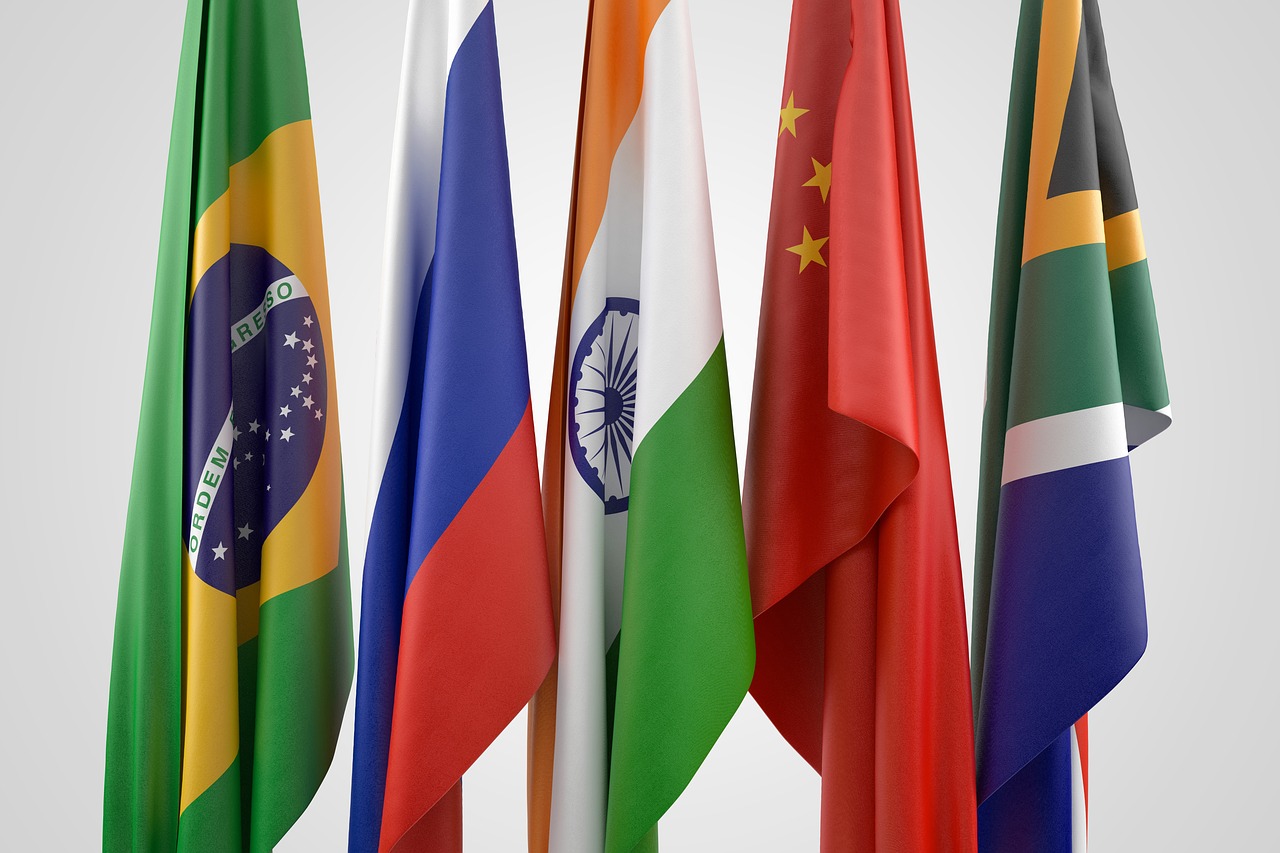
BRICS is named after the first letters of its founding members: Brazil, Russia, India, China, and South Africa. Since 2024, BRICS has expanded to include Indonesia, Ethiopia, Egypt, Iran, Saudi Arabia and the United Arab Emirates.
Here’s what we know about how India’s interests may have come into conflict with those of other BRICS nations:
How have BRICS countries responded to the US–Israel war on Iran?
The organisation itself, under India’s leadership in 2026, has not issued a direct statement on the US–Israeli military campaign in Iran — known as Operation Epic Fury — which has involved multiple missile and drone strikes across the country. The attacks have reportedly killed more than 1,230 people in the first six days.
Individually, however, three of the bloc’s five founding members have voiced concern, expressing sympathy for Iranian victims and condemning what they describe as violations of international law.
South African President Cyril Ramaphosa, whose government is currently locked in a diplomatic dispute with the United States over allegations by Donald Trump regarding a supposed “genocide” of white South Africans — claims widely rejected by South African authorities — raised alarm about the escalating conflict on Wednesday. He warned that the fighting could spread beyond the Middle East.
“We want a ceasefire, we want this madness to come to an end,” Ramaphosa told reporters, three days after the governing African National Congress issued a statement condemning the US and Israel’s justification of “anticipatory self-defence based on assumption or conjecture”.
Ramaphosa added that South Africa would be willing to play a mediating role in efforts to end the violence. Earlier this year, the country faced criticism from Washington after Iran participated in naval exercises hosted by South Africa under the BRICS framework, at a time when reports were emerging of violent crackdowns on Iranian protesters.
Russia has also strongly criticised the strikes. President Vladimir Putin condemned the joint US–Israeli attacks and the killing of Iran’s Supreme Leader, Ali Khamenei, in a letter to Iranian President Masoud Pezeshkian following the strikes last Saturday.
Moscow and Tehran maintain close ties, with Russia supplying Iran with military equipment. However, the Kremlin has not suggested it would intervene militarily on Iran’s behalf.
Speaking at a press conference, Russia’s foreign minister Sergey Lavrov said there was no evidence that Tehran was developing nuclear weapons — a central concern cited by the United States and Israel. Lavrov warned that the war could instead trigger the very outcome Washington and Tel Aviv say they want to prevent: nuclear proliferation across the region.
Russia’s foreign ministry also accused the US and Israel of carrying out “premeditated and unprovoked acts of armed aggression against a sovereign and independent UN member state”.
Moscow itself faces accusations of aggression over its ongoing war in Ukraine, now entering its fifth year.
China has likewise criticised the attacks. During a phone call with Israel’s foreign minister Gideon Saar on Tuesday, China’s foreign minister Wang Yi said Iran had been targeted even as negotiations between Washington and Tehran were making “significant progress”, including discussions addressing Israel’s security concerns, according to China’s Ministry of Foreign Affairs.
Wang added that China “opposes any military strikes launched by Israel and the US against Iran”.
Among the founding members of BRICS, India is the only country that has not explicitly condemned the US–Israeli strikes on Iran. Under New Delhi’s current chairmanship, the organisation itself has also remained notably silent on the conflict.