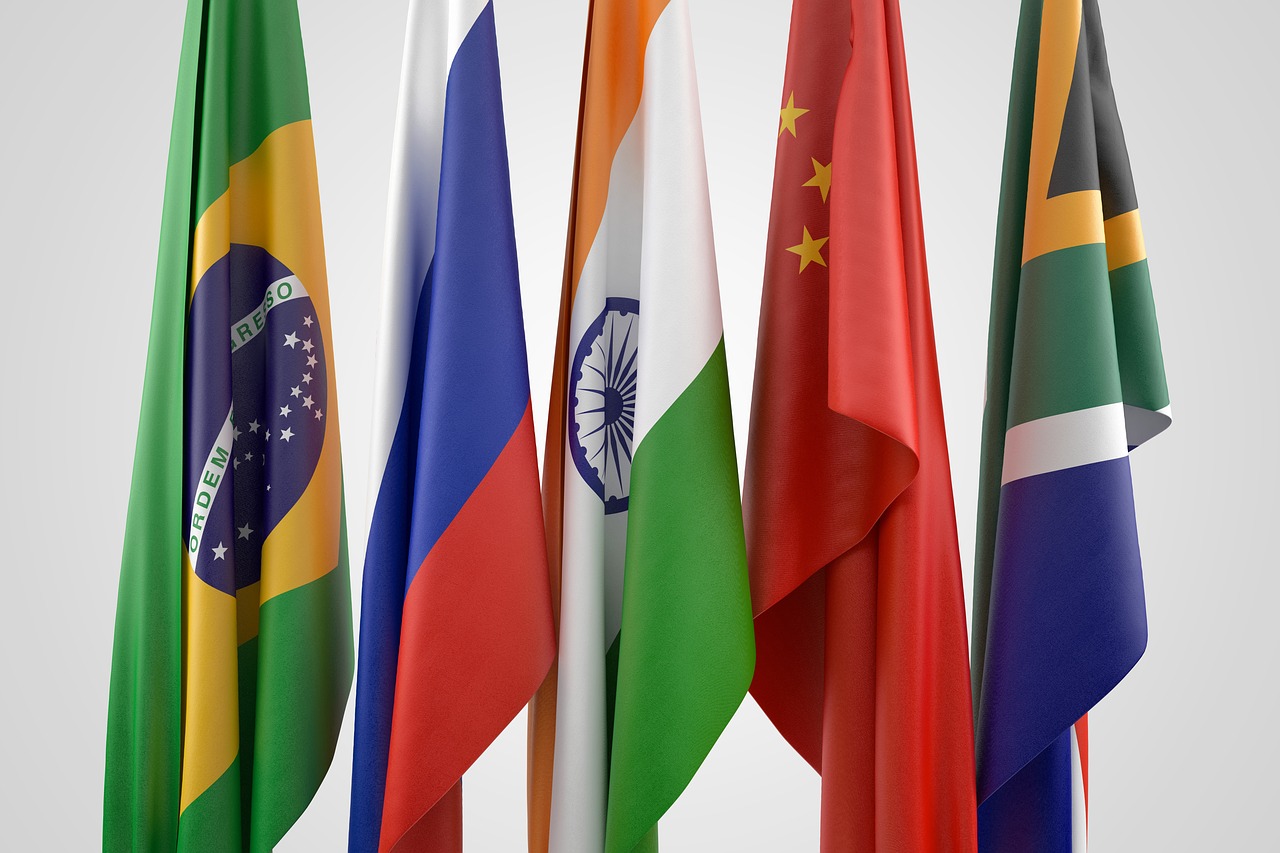
For years, debate around BRICS focused on one question: would the alliance create a common currency to challenge the US dollar? The idea generated headlines but never gained real traction. Now, BRICS is taking a different route — prioritising digital payments rather than monetary union.
Instead of introducing a shared currency, member states are working to link their national digital currencies through interoperable payment infrastructure. The aim is to allow money to move across borders more quickly and cheaply, without relying on dollar-based systems. This shift represents a quiet but potentially significant change in global finance, particularly for developing economies long burdened by slow and expensive cross-border payments.
Earlier proposals for a BRICS currency failed for predictable reasons. Members operate under different inflation regimes, maintain incompatible capital controls, and pursue divergent monetary policies. Smaller economies were also concerned that any unified system would be dominated by the Chinese yuan, given China’s economic weight. Monetary unification proved politically and economically impractical, prompting a strategic pivot.
A new strategy: linking digital currencies
The new approach avoids these problems. National currencies would remain intact, but their digital versions — such as China’s digital yuan, India’s digital rupee and Russia’s digital ruble — could be connected through shared technical standards. Each currency would stay under domestic control, while the underlying payment systems would be interoperable.
In practice, this would allow cross-border payments to settle directly in local currencies, without correspondent banks or the dollar-centred SWIFT network acting as intermediaries.
How payments could change
Today, international transfers usually involve multiple banks, dollar conversion and settlement delays that can stretch into days. A system linking central bank digital currencies would simplify that process.
Transactions could be settled:
directly between central banks
in real time or near-instant
without converting into dollars
at significantly lower cost
For traders, businesses and remittance senders, the appeal is clear.
Why BRICS is moving now
Several forces are driving this push.
- Dollar exposure: While the US dollar remains central to global trade, reliance on it carries risks, including liquidity shortages and spillovers from US monetary policy.
- Sanctions risk: Russia’s experience has highlighted how access to global payment systems can be restricted. Other countries in the Global South are increasingly wary of similar vulnerabilities.
- Trade growth: As intra-BRICS trade expands, settling transactions in local currencies becomes more practical — especially when digital platforms reduce friction.
Challenges remain. Technical standards must be aligned, cybersecurity risks will rise as systems interconnect, and governance issues — including dispute resolution and transparency — are still unresolved. Trust will also be critical. Shared infrastructure requires confidence that rules will be honoured and systems will not be politicised.
Toward a multipolar payments system
BRICS’ digital payments strategy reflects a broader trend: global finance is becoming more multipolar. The dollar is unlikely to disappear, and SWIFT will not be replaced overnight. But as alternative systems develop, financial networks may become less centralised and more resilient.
For the Global South, this could mean lower costs, faster trade and greater autonomy. For the wider world, it signals a gradual structural shift — one driven not by currency rivalry, but by payments infrastructure.