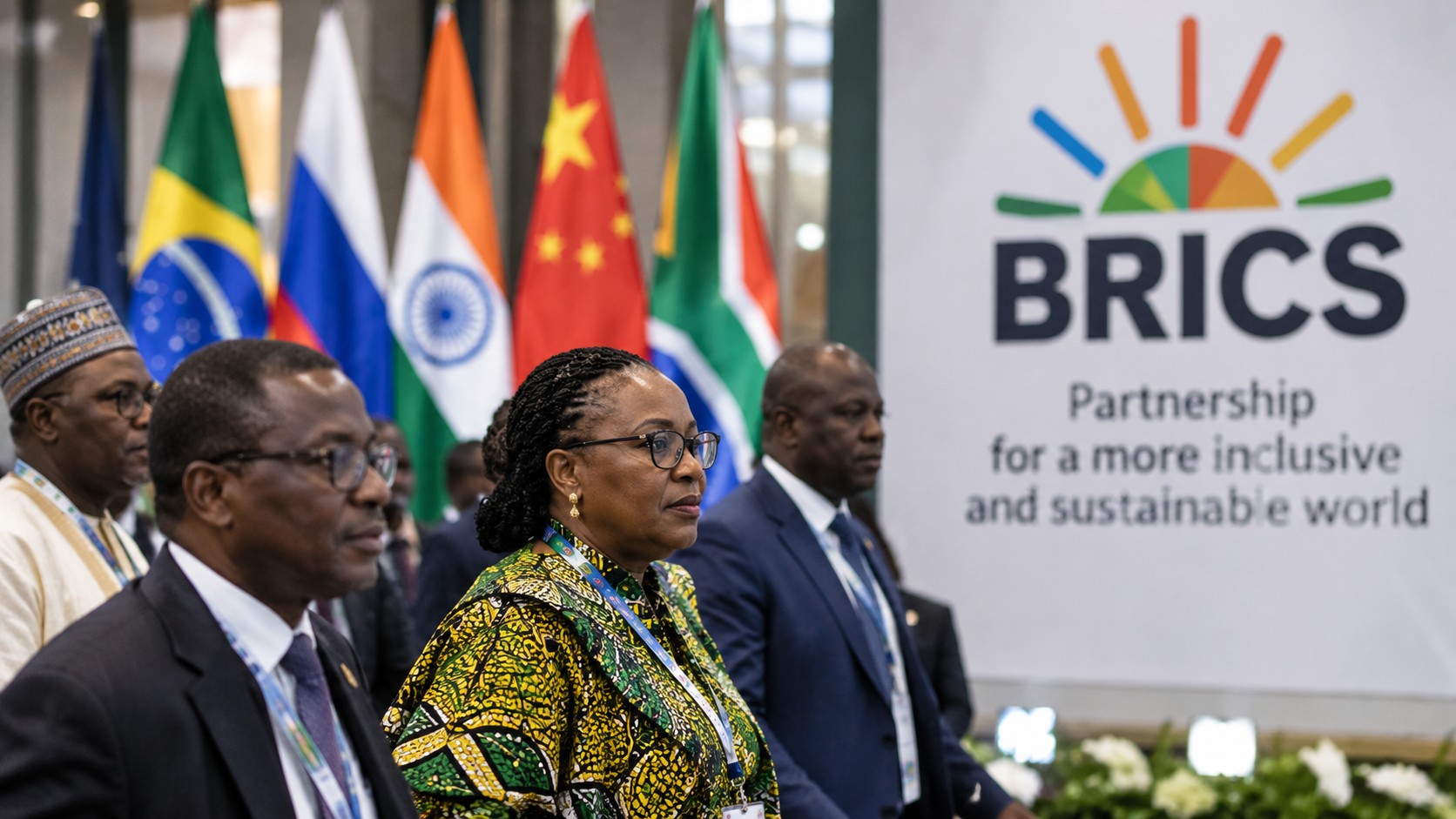
Africa is emerging as an increasingly important strategic frontier for BRICS, as Russia, China and India seek to expand their economic and geopolitical influence across the continent.
Speaking at the Russia-Africa Economic and Humanitarian Forum in Moscow late last month, Russian Deputy Foreign Minister Sergei Ryabkov described Africa as one of the primary drivers of BRICS’ development over the coming decades.
The three major powers within the alliance have distinct reasons for strengthening their African presence. For China and India, the emphasis is largely economic, with both countries expanding investment and trade ties to secure stronger positions in global value chains. Russia’s renewed engagement, meanwhile, is driven more by geopolitical considerations, including reasserting its position as a global power and advancing its vision of a multipolar world order.
This growing presence is reshaping the geopolitical landscape in a continent where established and emerging powers are competing for influence. In several African countries, economic engagement with BRICS members is increasingly significant, in some cases exceeding their commercial ties with European and American partners and international organisations.
Over the past decade, BRICS countries increased their exports to Africa from $187 billion to $309 billion, illustrating the scale of their expanding commercial footprint.
The bloc’s institutional links with the continent are also growing. South Africa, Egypt and Ethiopia are full members, while Algeria, Nigeria and Uganda participate as partner countries. Several other African nations have expressed interest in closer engagement with the grouping.
At the Moscow forum, Russia outlined several initiatives aimed at strengthening these connections. Proposals included an informal BRICS cooperation platform for African diamond-producing countries, the establishment of a BRICS grain exchange and greater African representation within the New Development Bank.
However, the growing economic and political engagement between BRICS countries and Africa should not be mistaken for a unified bloc strategy. Much of this cooperation still takes place through bilateral relationships rather than coordinated BRICS frameworks.
Although mounting sanctions pressure on Russia and escalating trade tensions between the United States and China have encouraged BRICS members to deepen dialogue and explore closer cooperation, their national interests remain the primary drivers of their respective African strategies.
For African countries, this presents both an opportunity and a challenge: greater access to investment, trade and alternative partnerships, but also the need to navigate competing geopolitical interests while ensuring that engagement with BRICS advances their own development priorities.